


Subjects + Curriculum
A Classical Foundation for Grades 6–8
Build knowledge. Grow in wisdom. Learn to serve.
At Haven, our aim is to nurture Christian leaders who are grounded in God’s truth, thoughtful in their decisions, and generous in using their gifts. Students learn to understand the world, recognize the needs of others, and take responsibility for the difference they can make.
Our classical Christian approach brings together rich knowledge, careful reasoning, clear expression, and character formation. Students read meaningful works, explore enduring questions, and connect learning across subjects. Ontario curriculum expectations guide core learning and preparation for high school.
Each year builds on the last, with growing opportunities to ask questions, discover strengths, and put learning into practice.
Grade 6 - Belonging
Build confidence. Develop habits. Contribute to community.
Grade 6 helps students feel known, valued, and ready to learn. Clear routines, guided practice, and practical experiences strengthen their foundations. Through reading, observation, discussion, and creative work, students learn to explain what they know, ask for help, and appreciate what others bring.
Our goal: A curious, dependable learner who recognizes their God-given worth and begins to take responsibility for learning and community life.
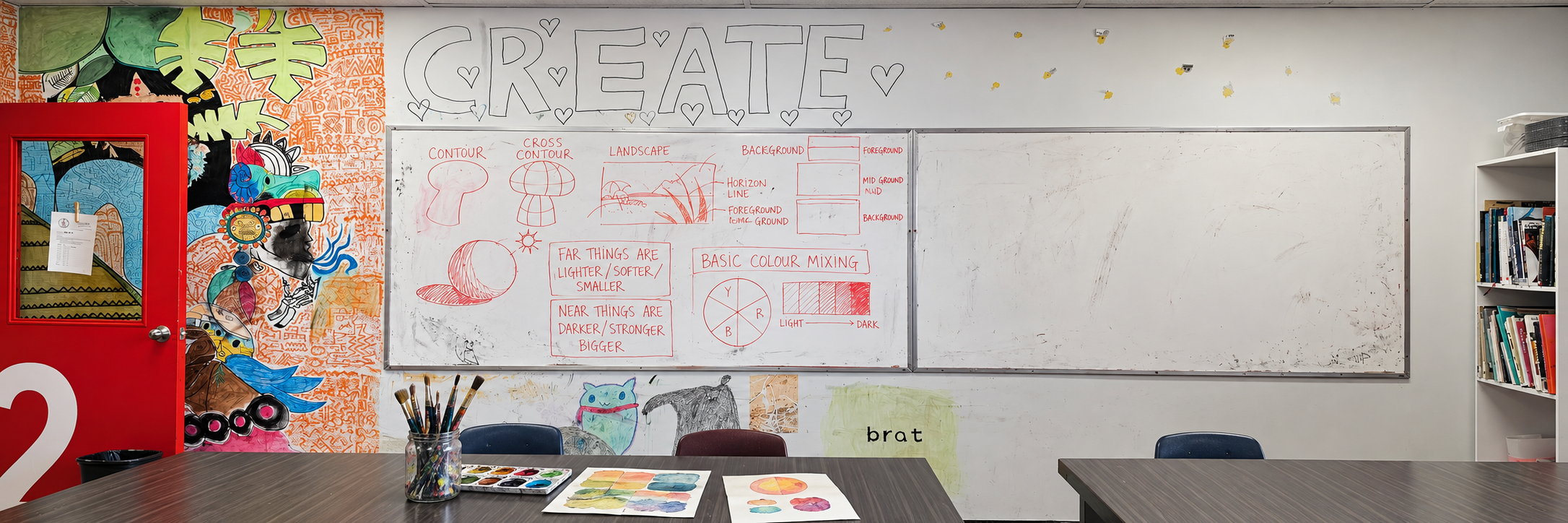
Leadership begins with everyday actions: listening well, keeping commitments, welcoming others, and caring for shared spaces
-
Discover how the Bible’s people, places, and events fit together. Trace God’s faithfulness through covenant and community, and connect Scripture with belonging, responsibility, and care for others.
-
Read stories, poetry, and selected classic works. Explore characters, choices, and themes; retell ideas accurately; and support simple interpretations with details from the text..
-
Turn ideas into clear sentences and organized paragraphs. Practise storytelling and explanation while strengthening grammar, punctuation, vocabulary, and the habit of revising work.
-
Distinguish facts from opinions and observations from conclusions. Ask clear questions, listen without interrupting, and share ideas through short, prepared talks.
-
Strengthen number skills with fractions, decimals, percentages, and ratios. Explore algebra, geometry, data, probability, and coding while explaining solutions and checking whether answers make sense.
-
Investigate biodiversity, electricity and energy, flight, and space. Observe closely, conduct safe investigations, record findings, and use evidence to explain the natural world.
-
Explore selected ancient and medieval societies alongside Canada’s diverse communities and global connections. Use maps, timelines, and different perspectives, including Indigenous perspectives, to understand people and places.
-
Build confidence in everyday conversations, listening, reading, and short written responses. Develop useful vocabulary and explore life in French-speaking communities.
-
Practise typing, file organization, digital safety, and introductory coding. Use digital tools to organize information, communicate ideas, and create simple designs.
-
Explore earning, saving, spending, giving, and basic budgeting. Compare needs and wants, recognize advertising influences, and practise responsible care of money and resources.
-
Explore drawing, painting, printmaking, clay, music, drama, and movement. Develop observation and craftsmanship while learning to rehearse, create, and contribute to a group.
-
Build movement skills, teamwork, and safe participation. Learn about puberty, nutrition, sleep, and emotional well-being while practising respect for personal boundaries and others.
Grade 7 - Wisdom
Ask deeper questions. Weigh evidence. Make wise choices.
Grade 7 helps students move from describing ideas to examining how and why they connect. Teachers model careful reasoning and guide students through discussion, investigation, and increasingly demanding work. Students learn to compare perspectives, recognize weak arguments, and respond thoughtfully to feedback
Our goal: A discerning learner who seeks truth, gives reasons for their thinking, and makes choices with honesty, humility, and care.
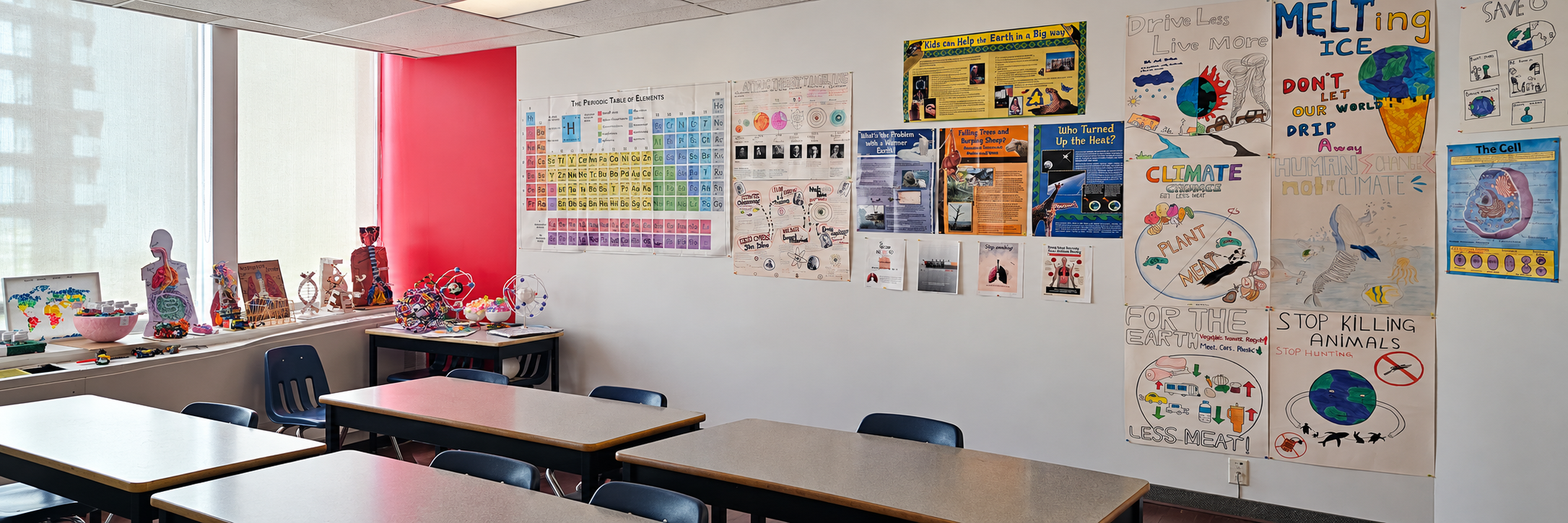
Leadership grows through discernment: checking information, considering consequences, resolving disagreements respectfully, and choosing what is right.
-
Study Proverbs and its teaching on speech, friendship, emotions, and decisions. Explore biblical accounts of leadership, justice, exile, and restoration, considering what faithful choices require.
-
Compare characters, perspectives, and genres. Explore symbolism and the ways authors shape meaning, supporting interpretations with evidence and considering questions of courage, justice, and responsibility.
-
Develop analytical, persuasive, and researched writing. Organize claims and evidence, acknowledge sources, vary sentences, and use feedback to make writing clearer and more convincing.
-
Examine claims, evidence, assumptions, and common reasoning errors. Practise discussion and debate, represent other viewpoints fairly, and respond to disagreement with clarity and respect.
-
Work with rational numbers, proportional relationships, equations, geometry, data, and probability. Use coding and mathematical models to investigate problems, compare strategies, and justify solutions.
-
Study ecosystems, pure substances and mixtures, heat, and the design of structures. Plan investigations, identify relationships, and consider how scientific and technological choices affect people and environments.
-
Study New France and British North America, 1713–1850, alongside selected Renaissance and Reformation topics. Compare historical perspectives and explore physical geography, natural resources, and sustainability.
-
Extend conversations, explain preferences with reasons, and write connected paragraphs. Strengthen comprehension and communication while exploring a wider range of French-speaking cultures.
-
Use coding, technical drawing, data, and prototypes to explore design problems. Test and improve solutions while checking the reliability of digital information and media.
-
Examine income, expenses, banking, interest, inflation, and fraud. Compare financial choices and consider how spending, saving, borrowing, and generosity affect individuals and communities.
-
Refine techniques in visual art, design, music, and drama. Interpret works, explain creative choices, offer useful feedback, and contribute reliably to collaborative performances.
-
Develop fitness, teamwork, and strategies for managing stress. Explore healthy relationships, consent, peer and online pressures, and substance-use prevention through thoughtful decision-making.
Grade 8 - Identity
Discover your gifts. Take responsibility. Prepare to serve.
Grade 8 helps students connect their beliefs, abilities, and choices with the people they are becoming. They tackle more complex texts and problems, develop a thoughtful voice, and take greater responsibility for planning and improving their work. Teacher guidance and regular feedback support their preparation for high school.
Our goal: A purposeful learner who can explain their convictions with humility, recognize their growing strengths, and use their learning to serve others.
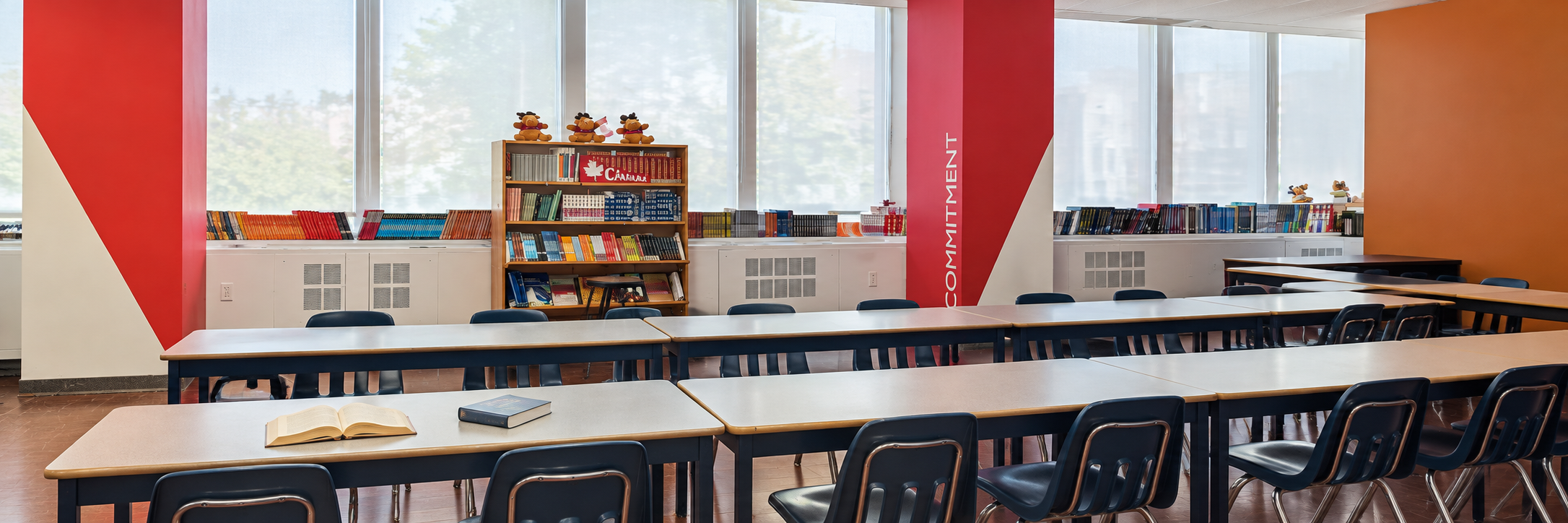
Leadership takes shape through responsibility: following through, acknowledging mistakes, including others, and using personal strengths to meet real needs.
-
Study the life of Christ and the Gospel of John, connecting the Old and New Testaments. Explore discipleship, identity in Christ, gifts, calling, and servant leadership.
-
Read more challenging classic and contemporary works. Examine worldview, conflicting values, and questions with more than one interpretation, building thoughtful responses supported by close reading.
-
Develop literary essays and structured research papers. Build clear arguments, evaluate sources, address other viewpoints, and revise for accuracy, coherence, and an appropriate formal voice.
-
Evaluate arguments, source credibility, and persuasive techniques. Prepare reasoned presentations, respond thoughtfully to questions, and communicate convictions with both confidence and humility.
-
Extend understanding of real numbers, powers, equations, linear relationships, geometry, and data. Apply mathematical models and explain reasoning while strengthening foundations for Grade 9.
-
Investigate cells, fluids, mechanical systems, and water systems. Analyse evidence, evaluate designs, and connect scientific learning with human health, environmental responsibility, and practical needs.
-
Study Canada, 1850–1914, including Confederation and the experiences of Indigenous, Black, and other communities. Explore industrialization and reform alongside global settlement, inequality, and sustainability.
-
Sustain conversations, interpret varied texts, and produce more developed writing. Strengthen listening, speaking, reading, and writing with growing independence in preparation for high school.
-
Build and test designs using circuits, sensors, and programmable devices. Examine privacy, bias, and the responsible use of artificial intelligence while documenting sources and design decisions.
-
Plan for financial goals and explore income, taxes, credit, debt, and introductory investing. Consider entrepreneurship, generosity, and how financial decisions can support the well-being of others.
-
Develop a personal artistic voice through creating, revising, performing, and presenting. Explain the meaning behind creative choices and take responsibility for individual and shared work.
-
Develop personal fitness goals, healthy relationships, and strategies for managing stress. Strengthen mental-health awareness, digital judgement, and the confidence to seek support when needed.
Supported to Grow
Across all three grades, students receive clear teaching, regular practice, and constructive feedback. They learn to set goals, plan their work, check their understanding, and reflect on their progress. Independence develops gradually, with support responsive to each learner’s needs.
Discussion, creative work, practical challenges, and service provide varied opportunities to discover interests and strengths. Students practise connecting what they know with how they live.
Rooted in truth. Growing in wisdom. Learning to lead through service.